Almond Oil for Hair Growth: A Science-Backed Guide to Thicker, Stronger Hair
Key Takeaways
- Sweet almond oil contains nutrients that may support overall hair health and appearance
- Research suggests almond oil may help reduce protein loss from hair strands
- Regular application might promote smoother, more manageable hair texture
- Proper dilution and patch testing are essential for safe use
- Results vary by individual and consistency of application matters
- Always consult a healthcare provider for persistent hair concerns
Table of Contents
- What Is Sweet Almond Oil and How Does It Work?
- The Science Behind Almond Oil Hair Benefits
- Understanding the Hair Growth Connection
- How to Use Almond Oil for Hair: Step-by-Step Methods
- DIY Almond Oil Hair Treatments and Recipes
- Choosing the Right Almond Oil for Your Hair
- Safety Considerations and Potential Side Effects
- Tips for Maximizing Your Results
What Is Sweet Almond Oil and How Does It Work?
Sweet almond oil, extracted from the kernels of Prunus dulcis, has been treasured for centuries as a natural beauty enhancer. Unlike bitter almond oil, sweet almond oil is gentle and safe for topical application, making it a popular choice for hair care enthusiasts seeking natural alternatives.
The Nutritional Profile of Sweet Almond Oil
What makes almond oil potentially beneficial for hair lies in its rich nutritional composition. This golden oil contains:
- Vitamin E (Alpha-tocopherol): A powerful antioxidant that may help protect hair from environmental damage
- Oleic Acid: A monounsaturated fatty acid that can penetrate the hair shaft
- Linoleic Acid: An omega-6 fatty acid that may support the hair's natural barrier
- Palmitic Acid: A saturated fatty acid that may help smooth the hair cuticle
- Proteins: Small amounts that may contribute to hair structure support
- Magnesium and Zinc: Trace minerals traditionally associated with hair health
How Almond Oil Interacts with Hair Structure
To understand how almond oil for hair growth might work, it's helpful to know basic hair anatomy. Each hair strand consists of three layers: the cuticle (outer protective layer), cortex (middle layer containing proteins), and medulla (innermost core).
Research suggests that certain oils, including almond oil, may interact with these layers in several ways:
- The small molecular structure of some components may allow penetration into the hair shaft
- Surface application may help smooth the cuticle layer
- Oil coating might provide a protective barrier against environmental stressors
- Moisturizing properties may help maintain hair flexibility
The Science Behind Almond Oil Hair Benefits
While extensive clinical trials specifically on almond oil for hair growth are limited, several studies have examined the effects of almond oil and its components on hair health. Here's what some research suggests:
Protein Loss Prevention
A landmark study published in the Journal of Cosmetic Science examined various oils' ability to prevent protein loss from hair. The research found that certain oils, when applied before shampooing, may help reduce the amount of protein that washes away from hair strands.
While this study didn't specifically focus on almond oil, it included oils with similar fatty acid profiles. The researchers noted that oils rich in oleic acid showed promising results in protecting hair protein structure.
Scalp Health Research
Some studies have explored almond oil's potential effects on skin health, which may be relevant to scalp care:
- Research suggests almond oil may help maintain skin barrier function
- Some evidence indicates it might support skin moisture retention
- Studies report that almond oil is generally well-tolerated by sensitive skin types
Antioxidant Properties
The vitamin E content in sweet almond oil has been studied for its antioxidant properties. Research indicates that:
- Vitamin E may help protect against oxidative stress
- Topical application might support the skin's natural defense mechanisms
- Antioxidants may play a role in maintaining healthy cellular function
Limitations of Current Research
It's important to note that while these findings are encouraging, most research on almond oil for hair specifically is still emerging. Many studies focus on skin applications or examine similar oils rather than almond oil directly. More targeted research is needed to fully understand almond oil's specific effects on hair growth and health.
Understanding the Hair Growth Connection
When people search for "almond oil for hair growth," they're often hoping to achieve thicker, fuller hair. It's crucial to understand what this might mean and set realistic expectations.
The Hair Growth Cycle
Hair growth occurs in cycles with three main phases:
- Anagen (Growth Phase): Lasts 2-7 years, during which hair actively grows
- Catagen (Transition Phase): A brief 2-3 week period where growth stops
- Telogen (Rest Phase): Lasts about 3 months before the hair sheds and the cycle repeats
Various factors can influence this cycle, including genetics, hormones, nutrition, stress levels, and overall health.
How Almond Oil Might Support Hair Health
While almond oil doesn't directly stimulate new hair follicle creation, it may support hair health in several ways:
Scalp Nourishment
A healthy scalp provides the foundation for healthy hair growth. Almond oil's moisturizing properties may help:
- Maintain scalp hydration
- Support the scalp's natural barrier function
- Provide nutrients that may benefit scalp health
Hair Strand Protection
Protecting existing hair from damage is crucial for maintaining length and thickness. Almond oil may help by:
- Creating a protective coating on hair strands
- Potentially reducing protein loss during washing
- Smoothing the hair cuticle to prevent tangling and breakage
Improved Hair Appearance
Many people report that regular use of almond oil treatments makes their hair appear:
- Shinier and more lustrous
- Smoother and more manageable
- Less prone to frizz and static
- Fuller-looking due to reduced breakage
How to Use Almond Oil for Hair: Step-by-Step Methods
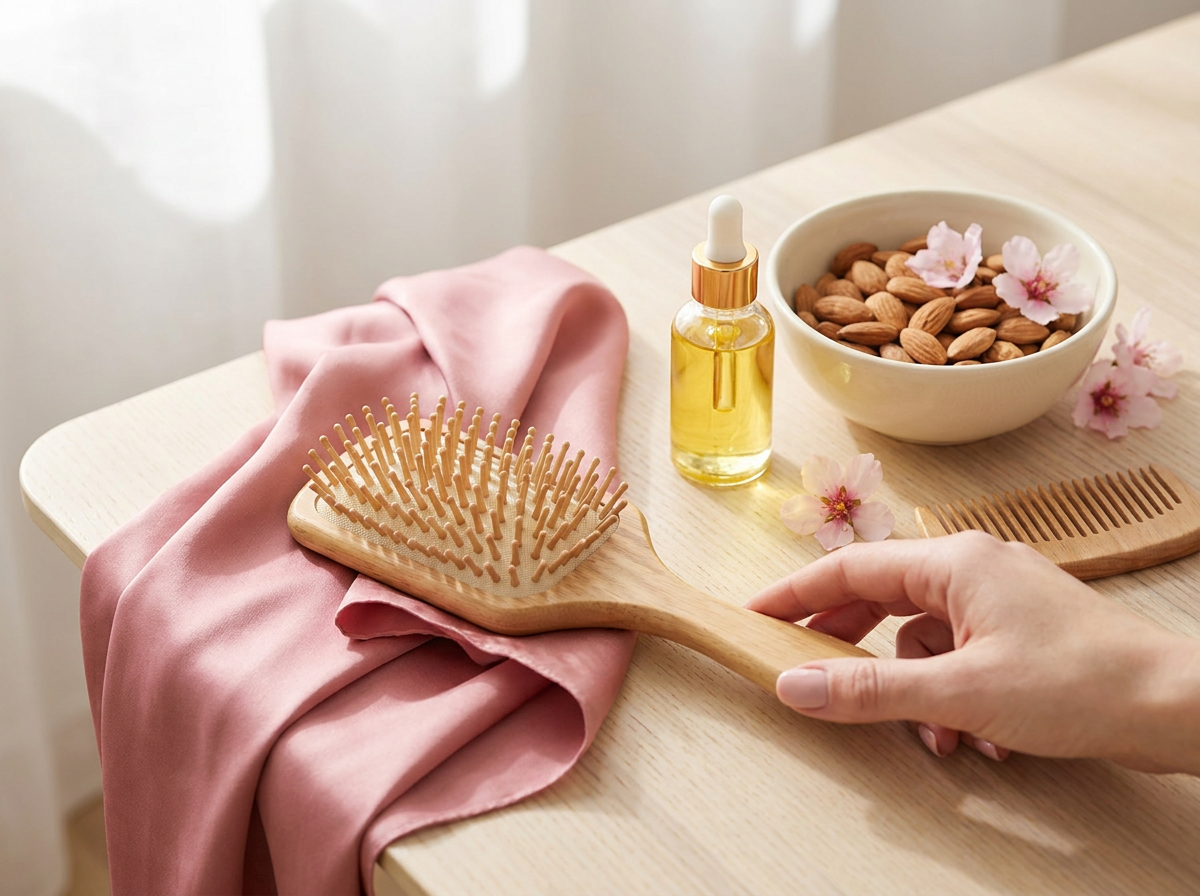
There are several ways to incorporate sweet almond oil into your hair care routine. Here are the most effective methods, complete with safety considerations:
Method 1: Pre-Shampoo Approach
This method may help protect hair from the stripping effects of shampooing.
What You'll Need:
- 2-4 tablespoons sweet almond oil (adjust for hair length)
- Wide-tooth comb
- Shower cap or towel
Instructions:
- Start with dry hair: Apply almond oil to unwashed hair for better penetration
- Warm the oil: Gently warm oil between your palms (test temperature first)
- Apply from mid-length to ends: Focus on the oldest, most damaged parts of your hair
- Gentle scalp massage: Use fingertips to massage oil into scalp for 2-3 minutes
- Cover and wait: Put on a shower cap and leave for 30 minutes to 2 hours
- Shampoo normally: You may need to shampoo twice to remove all oil
Safety Note: Always test oil temperature on your wrist before applying to hair. Oil that's too hot can damage hair and burn skin.
Method 2: Leave-In Approach
For daily protection and shine enhancement.
Instructions:
- Use sparingly: Start with just a few drops for shoulder-length hair
- Apply to damp hair: Work through hair from mid-length to ends
- Avoid roots: Focus on hair ends to prevent oily-looking roots
- Style as usual: The oil will provide heat protection and shine
Dilution Tip: For fine hair, mix 1 part almond oil with 2 parts leave-in conditioner to avoid weighing hair down.
Method 3: Overnight Deep Approach
For intensive nourishment and repair.
Instructions:
- Apply generously: Use enough oil to coat all hair strands
- Protect bedding: Wrap hair in a silk scarf or use an old pillowcase
- Morning wash: Shampoo thoroughly in the morning
- Frequency: Use this intensive approach 1-2 times per week maximum
Safety Warning: Perform a patch test 24 hours before first use. Apply a small amount to inner forearm and watch for redness, itching, or irritation.
Method 4: Scalp Massage Approach
Focus on scalp health with this targeted approach.
Instructions:
- Use 1-2 tablespoons: Warm oil slightly between palms
- Section hair: Part hair into 4-6 sections for even application
- Massage technique: Use circular motions with fingertips, not nails
- Duration: Massage for 5-10 minutes
- Rest period: Leave oil on scalp for 20-30 minutes before washing
DIY Almond Oil Hair Treatments and Recipes
Combining almond oil with other natural ingredients may enhance its potential benefits. Here are several DIY almond oil hair approach recipes:
Nourishing Almond Oil and Honey Mask
This combination may help moisturize and add shine to hair.
Ingredients:
- 3 tablespoons sweet almond oil
- 2 tablespoons raw honey
- 1 tablespoon coconut oil (optional)
Instructions:
- Warm ingredients slightly to mix easily
- Apply to damp hair from roots to tips
- Cover with shower cap for 45 minutes
- Rinse thoroughly with lukewarm water, then shampoo
Frequency: Use weekly for normal hair, bi-weekly for oily hair.
Strengthening Almond Oil and Egg Approach
Eggs contain proteins that may help support hair structure.
Ingredients:
- 2 tablespoons sweet almond oil
- 1 whole egg
- 1 tablespoon apple cider vinegar
Instructions:
- Beat egg thoroughly, then mix with other ingredients
- Apply to clean, damp hair
- Leave for 20-30 minutes
- Rinse with cool water (hot water will cook the egg!)
- Follow with regular shampoo if needed
Safety Note: Always use cool water when rinsing egg-based treatments to prevent cooked egg residue in hair.
Soothing Almond Oil and Aloe Vera Scalp Approach
This gentle combination may help soothe sensitive scalps.
Ingredients:
- 2 tablespoons sweet almond oil
- 2 tablespoons pure aloe vera gel
- 3-4 drops lavender essential oil (optional)
Instructions:
- Mix ingredients until well combined
- Part hair into sections and apply to scalp
- Massage gently for 5 minutes
- Leave on for 30 minutes
- Shampoo and condition as usual
Essential Oil Safety: Always dilute essential oils properly. The recipe above provides a safe dilution ratio of about 0.5%.
Weekly Almond Oil Hot Oil Approach
For those interested in more intensive care, you might want to explore our detailed guide on almond oil hot oil treatments for comprehensive instructions and safety tips.
Basic Hot Oil Approach:
- 4-6 tablespoons sweet almond oil
- Heat gently in double boiler or microwave (5-10 seconds)
- Test temperature on wrist before applying
- Apply to hair and scalp, cover with warm towel
- Leave for 45 minutes to 1 hour
- Shampoo thoroughly to remove
Temperature Warning: Oil should be warm, not hot. Overheated oil can cause burns and damage hair proteins.
| Approach Type | Frequency | Best For | Application Time |
|---|---|---|---|
| Pre-shampoo | 2-3 times/week | All hair types | 30 minutes - 2 hours |
| Leave-in | Daily | Dry, damaged hair | Until next wash |
| Overnight | 1-2 times/week | Very dry hair | 8+ hours |
| Hot oil approach | Weekly | Damaged hair | 45-60 minutes |
Choosing the Right Almond Oil for Your Hair
Not all almond oils are created equal. The quality and processing method can significantly impact the oil's potential benefits for your hair.
Types of Almond Oil
Sweet vs. Bitter Almond Oil
- Sweet Almond Oil: Safe for topical use, mild scent, ideal for hair care
- Bitter Almond Oil: Contains compounds that can be toxic, not recommended for cosmetic use
Important: Always choose sweet almond oil for hair treatments. Bitter almond oil should be avoided for safety reasons.
Processing Methods to Consider
Cold-Pressed vs. Refined
Cold-Pressed Almond Oil:
- Retains more natural nutrients
- Minimal processing preserves beneficial compounds
- Slightly nuttier scent
- May contain more vitamin E and antioxidants
- Generally more expensive but potentially more beneficial
Refined Almond Oil:
- More processed, some nutrients may be reduced
- Lighter color and milder scent
- Longer shelf life
- More affordable option
- Still effective for hair care, though potentially less potent
Quality Indicators to Look For
When shopping for sweet almond oil for hair, consider these quality markers:
Color and Consistency
- Color: Should be pale golden to light amber
- Consistency: Light to medium viscosity, not too thick or thin
- Clarity: Should be clear without cloudiness or particles
Packaging
- Dark glass bottles: Protect oil from light degradation
- Proper sealing: Prevents oxidation and contamination
- Size consideration: Buy in quantities you'll use within 6-12 months
Sourcing and Certifications
- Organic certification: Indicates pesticide-free almonds
- Third-party testing: Ensures purity and quality
- Country of origin: Some regions are known for high-quality almond production
Storage Tips for Maximum Potency
Proper storage helps maintain your almond oil's quality and potential benefits:
- Temperature: Store in a cool, dry place (room temperature or slightly cooler)
- Light exposure: Keep away from direct sunlight
- Air exposure: Always close bottles tightly after use
- Shelf life: Use within 6-12 months of opening for best results
- Signs of spoilage: Discard if oil smells rancid, changes color dramatically, or develops an off odor
Comparing Almond Oil to Other Hair Oils
If you're curious about how almond oil stacks up against other popular hair oils, you might find our comparison guide on almond oil vs. coconut oil for hair helpful in making an informed choice.
Safety Considerations and Potential Side Effects
While sweet almond oil is generally considered safe for most people, it's important to be aware of potential risks and take proper precautions.
Allergy Considerations
Nut Allergies
People with tree nut allergies should exercise extreme caution:
- Consult healthcare provider: Always speak with a doctor before using if you have known nut allergies
- Cross-reactivity: Some people allergic to tree nuts may react to almond oil
- Severity varies: Reactions can range from mild skin irritation to severe allergic responses
Skin Sensitivity
Even without nut allergies, some people may experience:
- Contact dermatitis
- Scalp irritation
- Redness or itching
- Increased sensitivity to sun exposure
Mandatory Patch Testing
Always perform a patch test before first use:
- Clean test area: Choose inner forearm or behind ear
- Apply small amount: Use just a drop or two of almond oil
- Wait 24-48 hours: Monitor for any reaction
- Look for signs: Redness, swelling, itching, burning, or rash
- Discontinue if reactive: Do not use if any negative reaction occurs
Important: Perform patch tests for DIY mixtures too, as combining ingredients can create new sensitivities.
Proper Application Guidelines
Scalp Application Safety
- Gentle massage only: Use fingertips, never fingernails
- Avoid excessive pressure: Don't massage aggressively
- Clean hands: Always wash hands before applying treatments
- Don't over-apply: More isn't always better
Heat Approach Precautions
- Temperature testing: Always test heated oil on wrist first
- Gradual heating: Warm oil slowly to prevent overheating
- No microwave shortcuts: Microwaving can create hot spots that cause burns
- Double boiler method: Safest way to heat oil treatments
When to Discontinue Use
Stop using almond oil immediately if you experience:
- Persistent scalp irritation or itching
- Increased hair loss or breakage
- Skin rash or hives
- Respiratory symptoms (in rare cases)
- Any signs of allergic reaction
Interactions and Contraindications
Medication Interactions
While topical almond oil is unlikely to interact with medications, consult your healthcare provider if you:
- Use recommendation scalp medications
- Take blood thinners (due to vitamin E content)
- Have autoimmune conditions affecting the skin
- Are pregnant or breastfeeding
Hair Approach Combinations
Be cautious when combining almond oil with:
- Chemical hair treatments (perms, relaxers, dyes)
- Strong medicated shampoos
- Other essential oil treatments
- Heat styling tools immediately after application
Professional Consultation: For persistent hair or scalp concerns, always consult with a dermatologist or trichologist rather than relying solely on home treatments.
Tips for Maximizing Your Results
To get the most out of your almond oil hair treatments, consider these evidence-based strategies and realistic expectations.
Setting Realistic Expectations
Understanding what almond oil can and cannot do helps set appropriate goals:
What You Might Notice:
- Improved hair shine and luster within 2-4 weeks
- Smoother, more manageable texture
- Reduced frizz and static
- Less breakage during styling
- Softer, more flexible hair strands
- Healthier-looking scalp condition
What Almond Oil Cannot Do:
- Create new hair follicles
- Reverse genetic hair loss patterns
- Change your natural hair growth rate significantly
- May help address underlying medical conditions causing hair loss
- Work overnight or provide instant results
Optimizing Your Routine
Consistency Is Key
Like most natural treatments, regular application tends to yield better results than sporadic use:
- Weekly treatments: Most people see benefits with 1-2 treatments per week
- Daily leave-in: Small amounts can be used daily for ongoing protection
- Seasonal adjustments: May need more frequent treatments in dry winter months
- Track progress: Keep notes or photos to monitor changes over time
Application Technique Matters
- Even distribution: Use sections to ensure all hair gets treated
- Focus on ends: Older hair at the ends typically needs more attention
- Scalp massage: Gentle massage may help with oil absorption
- Proper removal: Thorough but gentle cleansing prevents buildup
Complementary Hair Care Practices
Almond oil works best as part of a comprehensive hair care approach:
Gentle Hair Handling
- Wide-tooth combs: Reduce breakage when detangling
- Silk pillowcases: May reduce friction while sleeping
- Heat protection: Use before heat styling tools
- Regular trims: Remove split ends before they travel up the hair shaft
Supporting Overall Hair Health
- Balanced nutrition: Hair needs adequate protein, vitamins, and minerals
- Hydration: Proper water intake supports overall health
- Stress management: Chronic stress can impact hair health
- Gentle cleansing: Avoid over-washing or harsh sulfates
Troubleshooting Common Issues
Oily or Greasy Hair
If your hair feels weighed down:
- Reduce application amount
- Focus only on hair ends, avoid roots
- Try pre-shampoo treatments instead of leave-in applications
- Dilute with lighter oils or water-based products
No Visible Results
If you're not seeing expected improvements:
- Ensure you're using quality, pure almond oil
- Increase approach frequency gradually
- Consider combining with complementary ingredients
- Evaluate other hair care practices that might be counteracting benefits
- Be patient – natural treatments often take 6-8 weeks to show noticeable results
Monitoring Progress
Tracking Methods
- Photo documentation: Take weekly photos in consistent lighting
- Hair journal: Note texture, manageability, and shine changes
- Measurement tracking: Monitor length retention over time
- Professional assessment: Consider periodic checks with a hair care professional
Special Considerations for Different Hair Types
Fine Hair
- Use lighter application amounts
- Focus on pre-shampoo treatments
Sweet Almond Oil
Sweet Almond Oil from our own shop, in sizes from 0.5 oz to bulk.
From $8.99
Shop Now →