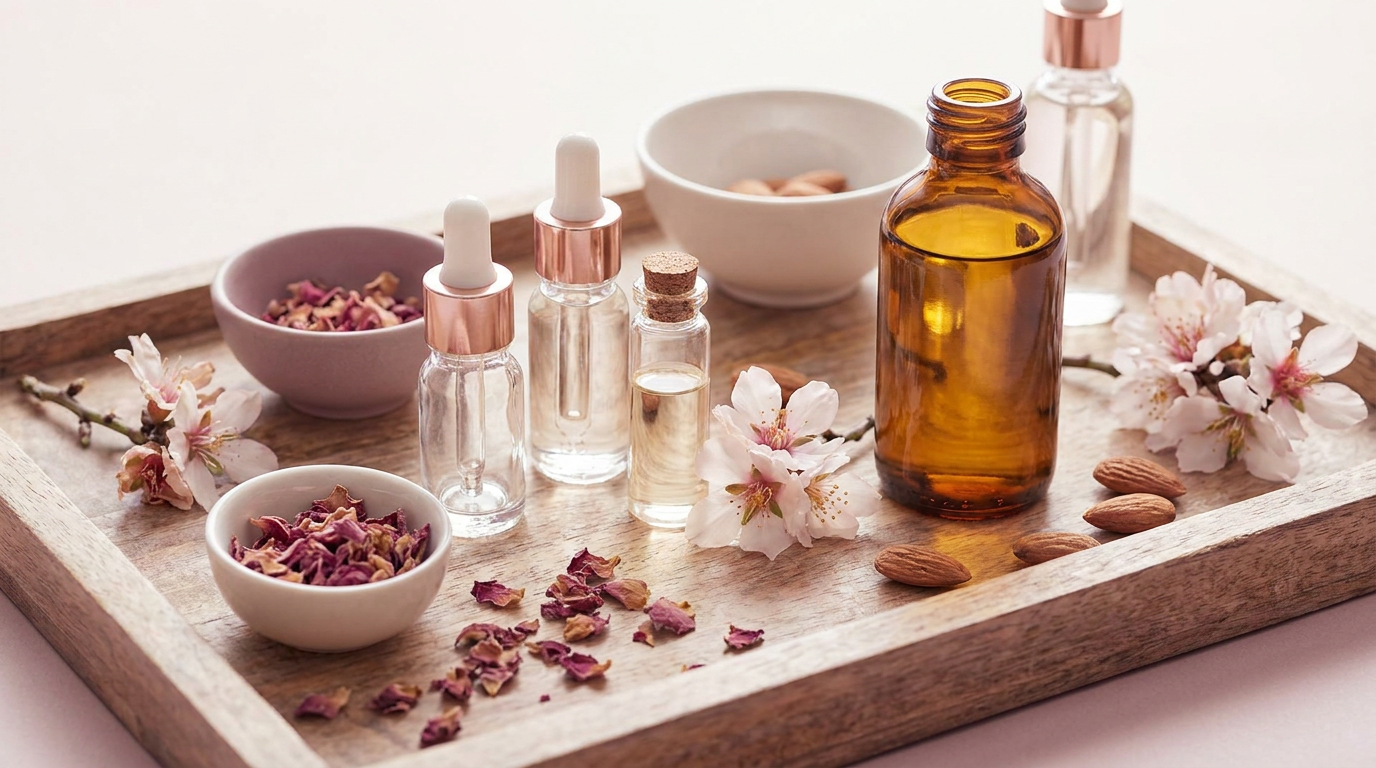
The Amberose Blend: Our Signature Almond Oil and Rose Ratio
Every perfume house has a scent it comes back to, the one that ends up on a wrist during a product photoshoot or dabbed on before a big meeting because it just feels right. Ours is the Amberose Blend. It started as an experiment to find an almond oil rose otto ratio that read as rose without turning syrupy, then grew into a full named almond oil house blend once we added sandalwood for depth and warmth. If you've been wanting to build a signature almond oil perfume blend of your own, this is the recipe we hand to every new team member who asks where to start.
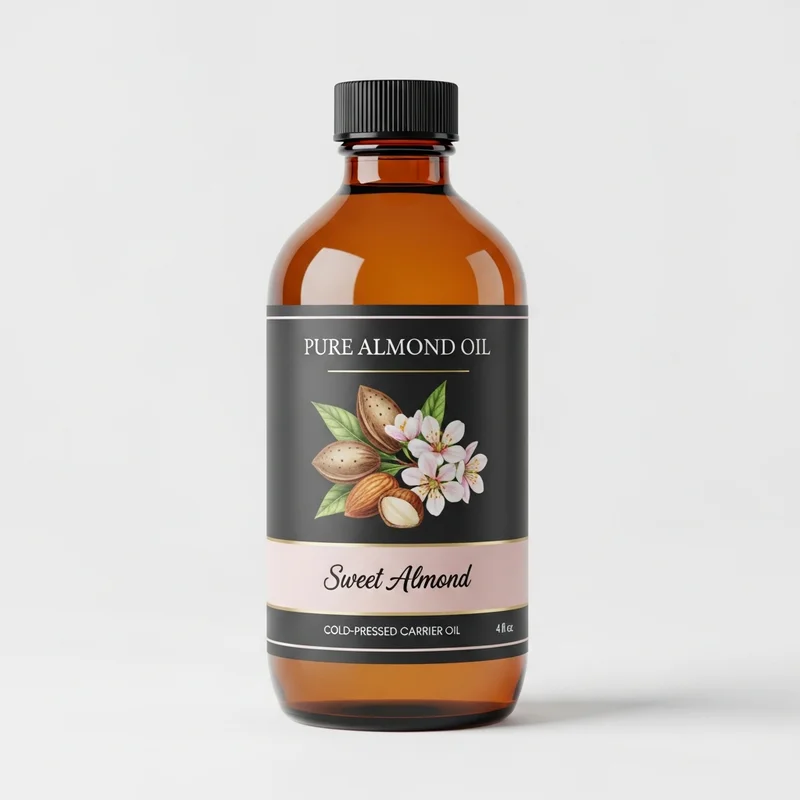
What follows is the full Amberose ratio, in both drops and milliliters, plus the blending steps, dilution guidance, and a few variations to make it your own.
Why This Ratio Works
Sweet almond oil is the quiet partner in this blend. It's light, absorbs at a reasonable pace, and doesn't fight for attention the way heavier carriers can, so the rose and sandalwood stay front and center on skin. It also has almost no scent of its own, which matters more than people expect. A carrier with a strong background note will muddy a fragrance blend before it even gets to develop.
Rose otto is the star, but it's a demanding one. The aroma is dense, a little green, and unmistakably floral without tipping into anything sugary. Used at too high a concentration it can feel overwhelming, so the Amberose ratio keeps it as an accent rather than the whole story. Sandalwood is what pulls the blend together. It brings a soft, woody roundness that gives the rose something to lean on, and it slows the way the top notes fade so the scent lasts through an afternoon instead of disappearing after twenty minutes. Together they create a warm, skin-close fragrance that reads as considered rather than fussy, which is exactly the character we wanted for a house signature.
What You'll Need
This recipe scales to two common bottle sizes. Pick the batch that matches the roller or dropper bottle you have on hand.
10 ml Batch (Amberose Original)
- Sweet almond oil: fill to 10 ml (about 200 drops, used as the base)
- Rose otto essential oil: 3 drops (approximately 0.15 ml)
- Sandalwood essential oil: 5 drops (approximately 0.25 ml)
- Amber resin or benzoin essential oil (optional, for depth): 2 drops (approximately 0.1 ml)
30 ml Batch
- Sweet almond oil: fill to 30 ml (about 600 drops, used as the base)
- Rose otto essential oil: 9 drops (approximately 0.45 ml)
- Sandalwood essential oil: 15 drops (approximately 0.75 ml)
- Amber resin or benzoin essential oil (optional): 6 drops (approximately 0.3 ml)
You'll also want a small glass roller bottle or dropper bottle (dark amber or cobalt glass holds up best), a stainless steel or glass stirring rod, and a label for the date you mixed it.
How to Blend the Amberose Ratio
- Sanitize your bottle. Wash the glass bottle and any tools with warm soapy water and let them air dry completely. Any leftover moisture can shorten how long the blend stays fresh.
- Add the essential oils first. Using the drop counts above, add the rose otto, then the sandalwood, then the amber or benzoin if you're using it, directly into the empty bottle.
- Swirl gently. Give the bottle a light swirl so the essential oils start to combine before the carrier goes in.
- Top with sweet almond oil. Fill the rest of the bottle with almond oil, leaving a small gap at the top so you can cap and shake without spilling.
- Cap and roll. Secure the lid or roller top and gently roll the bottle between your palms for about 30 seconds. Avoid vigorous shaking, which can introduce air bubbles.
- Let it rest. Set the bottle in a cool, dark spot for 24 to 48 hours before wearing it. This short rest lets the rose and sandalwood notes settle together instead of smelling separate and sharp.
- Label it. Note the blend name and the date you made it, so you always know how long it's been sitting.
Dilution, Patch Testing, and Safety Notes
The measurements above land the Amberose Blend at roughly a 3 to 4 percent dilution, which is a common range for a wearable perfume oil applied to pulse points rather than across large areas of skin. If you have sensitive skin or simply prefer a lighter scent, you can cut the essential oil drop counts by a third and top off with additional almond oil.
Rose otto and sandalwood are both considered generally well tolerated in perfume-strength dilutions, but every person's skin reacts differently, and reactions can happen with any fragrance oil. Before wearing this blend anywhere visible, do a patch test: apply a small amount of the finished blend to the inside of your forearm, cover loosely, and wait 24 to 48 hours to check for redness, itching, or irritation before applying it more broadly. If you notice any reaction, wash the area with mild soap and water and discontinue use.
Keep the blend away from eyes and mucous membranes, store it out of reach of children and pets, and if you are pregnant, nursing, or under the care of a healthcare provider for any reason, check with that provider before adding a new essential oil blend to your routine. This information is educational and not a substitute for professional guidance.
Storage and Shelf Life
Store the Amberose Blend in a dark glass bottle, away from direct sunlight and heat sources like windowsills or radiators. Sweet almond oil is a relatively stable carrier, but like any carrier oil it will slowly oxidize over time, especially once essential oils are added. Kept properly, this blend should stay pleasant for about 9 to 12 months. If the scent starts to smell flat, sour, or noticeably different from how it started, it's time to mix a fresh batch.
A small tip from our own supply closet: keep your rose otto and sandalwood essential oils themselves stored separately in a cool, dark cabinet when you're not blending. They're both more expensive and more concentrated than the carrier, so protecting their shelf life protects your whole batch of house blend going forward.
Three Variations on the Amberose Ratio
Once you've made the original a few times, these variations are easy ways to shift the personality of the blend without starting from scratch.
Amberose Noir
Add 2 drops of patchouli or vetiver to the 10 ml batch for a deeper, more grounded version. This variation leans earthy and works well as an evening scent.
Amberose Bloom
Add 2 drops of geranium and reduce the sandalwood to 3 drops. The result is lighter and more floral forward, closer to a fresh-cut garden than the original's warm base.
Amberose Warm
Increase the amber resin or benzoin to 4 drops and add 1 drop of vanilla-scented essential oil. This version reads cozier and sweeter, a nice choice for cooler months.
Making It Your Own
The Amberose ratio is a starting point, not a rulebook. Once you understand how the rose otto, sandalwood, and almond oil balance each other, you can nudge the drop counts to fit your own preferences, whether that means turning up the rose for a more floral signature or leaning further into sandalwood for something quieter and woodier. Keep notes on what you change so you can recreate (or avoid) a version later, and always give a new batch its 24 to 48 hour rest before deciding how you feel about it. That patience is usually what separates a blend that smells good from one that becomes an actual signature.