
Almond Oil for Cooking: Complete Guide to Smoke Points, Flavor, and Nutrition
Almond oil has emerged as a versatile and nutritious addition to modern kitchens, offering unique culinary benefits that extend far beyond traditional cooking oils. Whether you're a professional chef or home cooking enthusiast, understanding how to use almond oil effectively can elevate your culinary creations while potentially supporting your nutritional goals.
This comprehensive guide explores everything you need to know about cooking with almond oil, from technical specifications like smoke points to practical applications in everyday recipes.
Key Takeaways
- Refined almond oil has a smoke point of 420°F (215°C), making it suitable for most cooking methods
- Cold-pressed almond oil offers more nutritional benefits but has a lower smoke point of 350°F (175°C)
- Almond oil provides a mild, slightly nutty flavor that complements both sweet and savory dishes
- Rich in vitamin E and monounsaturated fats, almond oil may support heart health when used as part of a balanced diet
- Best applications include light sautéing, salad dressings, baking, and finishing dishes
Table of Contents
- Types of Almond Oil for Cooking
- Understanding Smoke Points and Cooking Methods
- Flavor Profile and Culinary Characteristics
- Nutritional Composition and Benefits
- Best Cooking Applications and Techniques
- Storage and Selection Guidelines
- Recipe Ideas and Culinary Inspiration
- How Almond Oil Compares to Other Cooking Oils
Types of Almond Oil for Cooking
When selecting almond oil for cooking, understanding the different types available is crucial for achieving optimal results in your kitchen. Not all almond oils are created equal, and each variety offers distinct characteristics that make them suitable for specific culinary applications.
Refined Almond Oil
Refined almond oil undergoes processing that removes impurities and creates a more stable cooking medium. This type of almond oil features:
- Higher smoke point of approximately 420°F (215°C)
- Neutral flavor that won't overpower dishes
- Longer shelf life due to processing
- Clear, light appearance
- Better stability at high temperatures
Cold-Pressed (Unrefined) Almond Oil
Cold-pressed almond oil retains more of its natural compounds and characteristics:
- Lower smoke point of around 350°F (175°C)
- More pronounced almond flavor
- Higher levels of natural antioxidants
- Golden color with potential for cloudiness
- Best for low-heat cooking and finishing
Sweet vs. Bitter Almond Oil
For cooking purposes, only sweet almond oil should be used. Sweet almond oil is derived from edible almonds and is safe for consumption, while bitter almond oil contains compounds that make it unsuitable for culinary use.
Understanding Smoke Points and Cooking Methods
The smoke point of almond oil is a critical factor that determines which cooking methods are appropriate and safe. Understanding these temperature thresholds helps prevent oil degradation and ensures optimal flavor and nutritional retention.
What Happens at the Smoke Point
When cooking oil reaches its smoke point, it begins to break down chemically, producing visible smoke and potentially harmful compounds. At this temperature:
- The oil's molecular structure changes
- Nutritional benefits may diminish
- Flavor can become bitter or acrid
- Free radicals may form
Cooking Methods by Temperature Range
| Cooking Method | Temperature Range | Refined Almond Oil | Cold-Pressed Almond Oil |
|---|---|---|---|
| Light Sautéing | 250-300°F | ✓ Excellent | ✓ Excellent |
| Medium Sautéing | 300-350°F | ✓ Good | ⚠ Caution |
| Pan-Frying | 350-400°F | ✓ Good | ✗ Not Recommended |
| Deep Frying | 350-375°F | ⚠ Limited Use | ✗ Not Recommended |
Flavor Profile and Culinary Characteristics
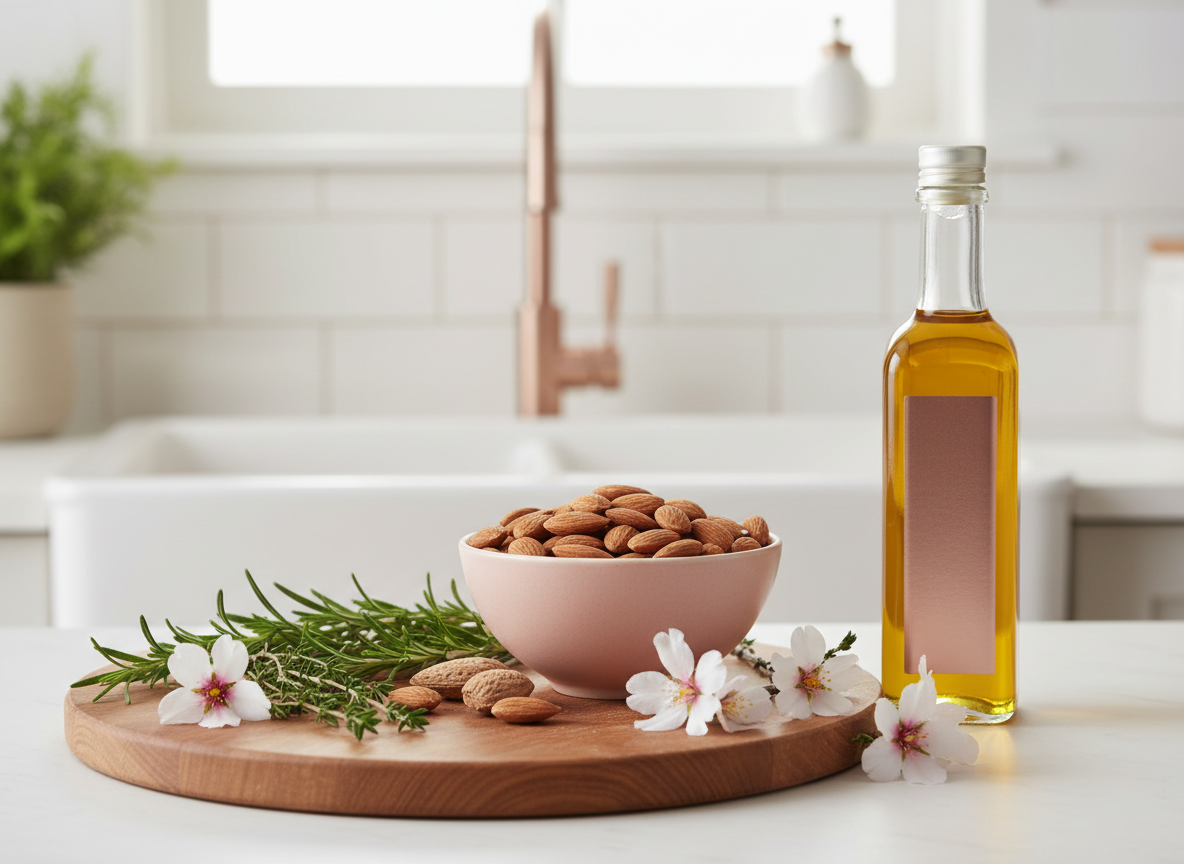
Almond oil brings a distinctive yet subtle flavor profile to dishes that sets it apart from other cooking oils. Understanding these characteristics helps in selecting the right applications and pairing opportunities.
Taste Characteristics
Cooking with almond oil offers several unique flavor attributes:
- Mild Nuttiness: A gentle almond flavor that enhances without overwhelming
- Subtle Sweetness: Natural sweet undertones that complement both savory and dessert applications
- Clean Finish: No heavy or greasy aftertaste
- Versatile Pairing: Works well with herbs, spices, and acidic ingredients
Aroma Profile
The aromatic qualities of almond oil contribute significantly to the overall dining experience:
- Delicate, pleasant almond scent
- No overpowering or rancid odors when fresh
- Complements rather than competes with food aromas
Nutritional Composition and Benefits
Almond oil offers an impressive nutritional profile that may support overall wellness when incorporated into a balanced diet. Understanding these nutritional aspects helps inform decisions about incorporating almond oil into your cooking routine.
Macronutrient Breakdown
Per tablespoon (14g) of almond oil:
- Calories: Approximately 120
- Total Fat: 14g
- Monounsaturated Fat: 9.5g (68% of total fat)
- Polyunsaturated Fat: 2.4g (17% of total fat)
- Saturated Fat: 1.1g (8% of total fat)
- Carbohydrates: 0g
- Protein: 0g
Vitamin and Mineral Content
Almond oil is particularly rich in certain nutrients:
- Vitamin E: Approximately 5.3mg per tablespoon (35% Daily Value)
- Phytosterols: Natural plant compounds that may support heart health
- Antioxidants: Various compounds that may help protect against oxidative stress
Potential Health Considerations
Research suggests that incorporating almond oil into a balanced diet may offer several benefits:
- The high monounsaturated fat content may support heart health
- Vitamin E acts as an antioxidant that may help protect cells
- The favorable fat profile may support healthy cholesterol levels
- Some studies suggest nuts and nut oils may support weight management when used appropriately
Note: These statements are for educational purposes only. Always consult with a qualified healthcare provider regarding your individual nutritional needs.
Best Cooking Applications and Techniques
Maximizing the benefits of cooking with almond oil requires understanding the optimal applications and techniques that showcase its unique properties while respecting its limitations.
Ideal Cooking Applications
Salad Dressings and Marinades
Almond oil excels in cold applications where its flavor can shine:
- Creates smooth, emulsified vinaigrettes
- Pairs beautifully with citrus and herbs
- Adds richness without heaviness
- Works well in Mediterranean-style dressings
Light Sautéing and Stir-Frying
For gentle cooking methods, almond oil performs excellently:
- Ideal for cooking vegetables at medium temperatures
- Perfect for delicate proteins like fish
- Excellent for aromatic base preparations
- Great for finishing cooked dishes
Baking Applications
Almond oil can replace other fats in many baking scenarios:
- Substitute for butter in certain cake recipes
- Excellent in muffins and quick breads
- Perfect for almond-flavored desserts
- Creates moist texture in baked goods
Applications to Avoid
Certain cooking methods are not well-suited for almond oil:
- High-temperature deep frying (especially cold-pressed varieties)
- Extended high-heat cooking
- Applications requiring neutral flavor profiles
- Budget-conscious cooking (due to higher cost)
Storage and Selection Guidelines

Proper storage and selection of almond oil ensures optimal flavor, nutritional value, and safety in your culinary applications.
Selection Criteria
When choosing almond oil for cooking, consider these factors:
- Source: Look for oils from reputable manufacturers
- Processing Method: Decide between refined and cold-pressed based on intended use
- Packaging: Dark glass bottles protect from light degradation
- Expiration Date: Choose products with longer shelf life remaining
- Organic Certification: Consider organic options if important to your dietary preferences
Proper Storage Techniques
Maintaining almond oil quality requires attention to storage conditions:
- Temperature: Store in a cool, dry place away from heat sources
- Light Protection: Keep in dark bottles or pantries away from direct sunlight
- Air Exposure: Seal containers tightly after each use
- Refrigeration: Not necessary but can extend shelf life
- Shelf Life: Typically 12-24 months when stored properly
Signs of Rancidity
Recognize when almond oil should be discarded:
- Off or bitter smell
- Change in color or clarity
- Unusual taste or texture
- Visible particles or cloudiness in refined oil
Recipe Ideas and Culinary Inspiration
Exploring practical applications helps demonstrate the versatility of cooking with almond oil across various culinary traditions and meal types.
Salad Dressing Recipes
Classic Almond Vinaigrette
- 3 tablespoons almond oil
- 1 tablespoon white wine vinegar
- 1 teaspoon Dijon mustard
- Salt and pepper to taste
- Optional: minced shallots or herbs
Mediterranean Herb Dressing
- ¼ cup almond oil
- 2 tablespoons lemon juice
- 1 clove garlic, minced
- 1 teaspoon dried oregano
- Salt and pepper to taste
Light Cooking Applications
Almond Oil Sautéed Vegetables
Perfect technique for highlighting vegetable flavors:
- Heat 2 tablespoons almond oil in a large pan over medium heat
- Add vegetables in order of cooking time needed
- Sauté until tender-crisp
- Season with salt, pepper, and fresh herbs
- Finish with a drizzle of fresh almond oil
Baking Applications
Almond Oil Cake Substitutions
Guidelines for replacing butter with almond oil in baking:
- Use ¾ the amount of almond oil as butter called for
- Reduce other liquids slightly to compensate
- Expect a more tender, moist texture
- Works best in cakes, muffins, and quick breads
How Almond Oil Compares to Other Cooking Oils
Understanding how almond oil stacks up against other popular cooking oils helps inform decisions about when and why to choose it for specific applications.
| Oil Type | Smoke Point | Flavor Profile | Best Uses | Cost Range |
|---|---|---|---|---|
| Almond Oil (Refined) | 420°F | Mild, nutty | Sautéing, dressings, baking | High |
| Extra Virgin Olive Oil | 375°F | Fruity, robust | Dressings, low-heat cooking | Medium-High |
| Avocado Oil | 520°F | Neutral, mild | High-heat cooking, frying | High |
| Coconut Oil | 350°F | Coconut, sweet | Baking, medium-heat cooking | Medium |
| Vegetable Oil | 400-450°F | Neutral | All-purpose cooking, frying | Low |
When to Choose Almond Oil
Almond oil is the optimal choice when:
- You want to add subtle nutty flavor without overwhelming the dish
- Preparing dishes where nutritional benefits are prioritized
- Creating gourmet or special occasion meals
- Working with delicate ingredients that pair well with mild nuttiness
- Making dishes where the almond flavor complements the overall profile
When to Choose Alternatives
Consider other oils when:
- Budget constraints are a primary concern
- High-heat cooking methods are required
- Completely neutral flavor is essential
- Large quantities are needed for commercial cooking
Conclusion
Cooking with almond oil offers a unique opportunity to enhance your culinary repertoire with a flavorful, nutritious, and versatile cooking medium. From its impressive smoke point characteristics to its subtle nutty flavor profile, almond oil serves as an excellent choice for a wide range of cooking applications.
Whether you're creating delicate vinaigrettes, gently sautéing seasonal vegetables, or incorporating it into baked goods, understanding the proper techniques and applications ensures you'll get the most value from this premium cooking oil. While the higher cost compared to conventional oils may require thoughtful consideration, the unique flavor contributions and potential nutritional benefits make almond oil a worthwhile addition to any well-equipped kitchen.
As with any cooking ingredient, success with almond oil comes from understanding its strengths, respecting its limitations, and choosing the right type for your specific culinary goals. By following the guidelines and techniques outlined in this guide, you'll be well-equipped to incorporate almond oil into your cooking routine with confidence and creativity.