
Cold-Pressed Almond Oil Explained: Why Extraction Method Matters for Quality and Potency
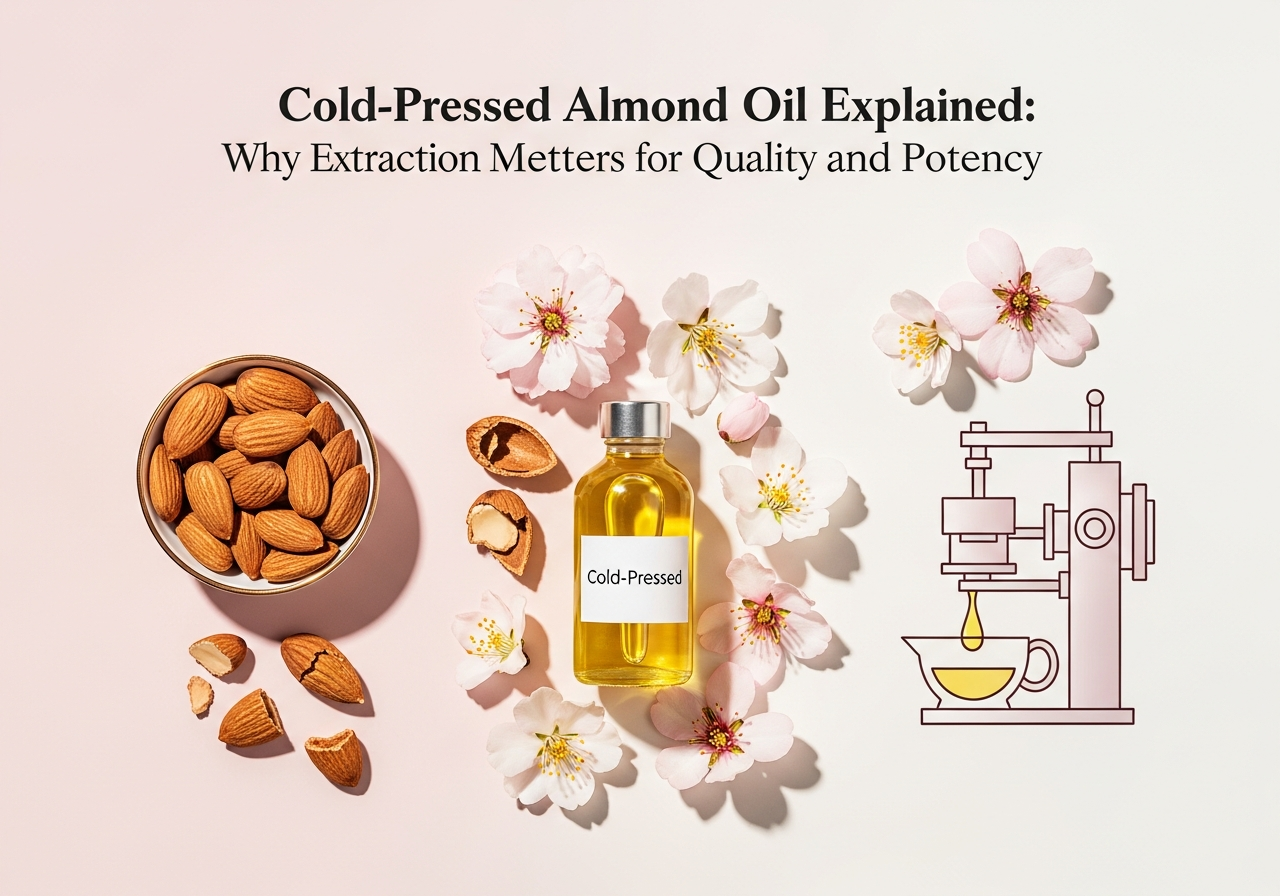
When you're shopping for almond oil, you've probably noticed labels touting "cold-pressed" or "unrefined" – but what do these terms really mean for your beauty routine? The extraction method used to create almond oil significantly impacts its color, scent, nutrient profile, and overall quality. Understanding these differences empowers you to choose the best almond oil for your specific skincare and hair care needs.
In this comprehensive guide, we'll explore the fascinating world of almond oil extraction, compare different processing methods, and help you understand why cold-pressed varieties are often considered the gold standard for beauty enthusiasts and wellness-minded consumers.
Key Takeaways
- Cold-pressed almond oil retains more natural nutrients and antioxidants than refined varieties
- Extraction temperature dramatically affects oil quality, color, and shelf life
- Unrefined oils offer richer sensory experiences but may have shorter shelf lives
- Different extraction methods serve different purposes in beauty and culinary applications
- Quality indicators help you identify truly cold-pressed products in the marketplace
Table of Contents
- Understanding Cold-Pressing: The Gold Standard
- Almond Oil Extraction Methods Compared
- Cold-Pressed vs Refined: A Detailed Comparison
- How to Identify High-Quality Cold-Pressed Almond Oil
- How Processing Affects Nutrients and Beauty Benefits
- Choosing the Right Type for Your Needs
- Storage and Shelf Life Considerations
- Common Myths and Misconceptions
Understanding Cold-Pressing: The Gold Standard
Cold-pressing represents the most gentle method of extracting oil from almonds, preserving the nut's natural integrity while maintaining optimal nutrient density. This traditional technique involves mechanically pressing almonds without applying external heat, typically keeping temperatures below 120°F (49°C) throughout the entire extraction process.
The Cold-Pressing Process Step by Step
The journey from almond to oil involves several carefully controlled stages:
- Selection and Cleaning: Premium almonds are sorted and cleaned to remove debris and damaged nuts
- Grinding: Almonds are ground into a fine paste using stone mills or metal grinders
- Pressing: The paste is placed in hydraulic or expeller presses that apply tremendous pressure without heat
- Separation: Oil is separated from the almond meal through natural settling or centrifugation
- Filtering: Minimal filtering removes any remaining solid particles while preserving beneficial compounds
Why Temperature Control Matters
Temperature control during extraction is crucial because excessive heat can break down delicate fatty acids, antioxidants, and vitamins naturally present in almonds. Research suggests that maintaining lower temperatures during processing may help preserve compounds like vitamin E, which some studies indicate could contribute to the oil's stability and potential benefits for skin appearance.
Cold-pressed almond oil typically retains its natural golden color, subtle nutty aroma, and smooth texture – characteristics that indicate minimal processing and maximum retention of the almond's original properties.
Almond Oil Extraction Methods Compared
Understanding the various extraction methods helps you make informed decisions about which type of almond oil best suits your needs. Each method produces oils with distinct characteristics and applications.
| Extraction Method | Temperature | Yield | Characteristics |
|---|---|---|---|
| Cold-Pressed | Below 120°F | Lower | Golden color, nutty scent, rich nutrients |
| Expeller-Pressed | 120-200°F | Medium | Light golden, mild scent, good quality |
| Heat-Extracted | 200-400°F | Higher | Pale yellow, neutral scent, extended shelf life |
| Solvent-Extracted | Variable | Highest | Clear, odorless, highly refined |
Cold-Pressed Extraction
This method produces what many consider the highest quality almond oil. The mechanical pressing occurs at temperatures that don't exceed the natural heat generated by friction, typically staying well below 120°F. This gentle approach may help preserve heat-sensitive compounds that contribute to the oil's characteristic appearance and properties.
Expeller-Pressed Extraction
Expeller-pressing uses mechanical force similar to cold-pressing but allows for slightly higher temperatures due to increased friction and processing speed. While still considered a quality extraction method, the higher temperatures may affect some of the more delicate compounds found in almonds.
Heat-Extracted Methods
Traditional heat extraction involves applying external heat to increase oil yield. While this method produces more oil per pound of almonds, the elevated temperatures can alter the oil's composition, resulting in a lighter color and milder aroma compared to cold-pressed varieties.
Solvent Extraction
This industrial method uses chemical solvents to extract maximum oil yield from almonds. The resulting oil undergoes extensive refining to remove solvent residues, producing a clear, odorless oil with extended shelf life but minimal resemblance to its natural state.
Cold-Pressed vs Refined: A Detailed Comparison
The debate between cold-pressed and refined almond oil centers on quality, purity, and intended use. Each type serves different purposes and appeals to different consumer preferences.
Visual and Sensory Differences
Cold-Pressed Almond Oil:
- Rich golden to amber color
- Distinctive sweet, nutty aroma
- Slightly thicker consistency
- Natural variations between batches
- May contain trace amounts of almond proteins
Refined Almond Oil:
- Clear to pale yellow appearance
- Neutral, almost odorless
- Uniform, lightweight texture
- Consistent appearance across batches
- Allergen proteins typically removed
Nutrient Profile Considerations
Research suggests that processing methods can impact the retention of naturally occurring compounds in almond oil. Cold-pressed varieties may maintain higher levels of:
- Vitamin E: A natural antioxidant that may contribute to oil stability
- Phytosterols: Plant compounds that some research indicates might benefit skin appearance
- Phenolic compounds: Natural antioxidants that may help protect against oxidation
- Essential fatty acids: Including oleic and linoleic acids in their natural ratios
It's important to note that while these compounds are naturally present in almonds, their specific effects when applied topically require further research. For detailed information about almond oil's nutritional components, you might find our comprehensive nutrition guide helpful.
Shelf Life and Stability
The processing method significantly affects how long almond oil maintains its quality:
Cold-Pressed: Typically maintains quality for 12-18 months when stored properly. The presence of natural antioxidants may help protect against rancidity, but the oil is more sensitive to light and heat exposure.
Refined: Often maintains stability for 2-3 years due to the removal of compounds that can contribute to oxidation. However, this extended shelf life comes at the cost of reducing naturally occurring beneficial compounds.
How to Identify High-Quality Cold-Pressed Almond Oil
With the growing popularity of natural beauty products, the market has seen an influx of almond oil products with varying quality levels. Learning to identify authentic, high-quality cold-pressed almond oil protects your investment and ensures you're getting the product you expect.
Label Reading Essentials
Authentic cold-pressed almond oil should clearly state its extraction method on the label. Look for these key terms:
- "Cold-pressed" or "Cold-processed"
- "Unrefined" or "Virgin"
- "First press" or "Single press"
- "No external heat applied"
Be wary of vague terms like "natural processing" or "traditionally made" without specific mention of cold-pressing methods.
Visual Quality Assessments
High-quality cold-pressed almond oil exhibits specific visual characteristics:
Color: Should range from light golden to rich amber, depending on the almond variety and processing specifics. Avoid oils that appear completely clear, as this may indicate refining.
Clarity: While cold-pressed oil should be relatively clear, slight cloudiness or natural sediment can be normal and may indicate minimal processing.
Consistency: Should flow smoothly but may be slightly thicker than highly refined oils due to retained natural compounds.
Scent Profile
Authentic cold-pressed almond oil should have a subtle, sweet, nutty aroma reminiscent of fresh almonds. The scent should be pleasant and not overpowering. Oils with no scent at all may have been heavily refined, while rancid or bitter odors indicate quality issues.
Source and Production Information
Premium cold-pressed almond oil producers often provide detailed information about:
- Almond sourcing locations
- Harvest and processing dates
- Third-party quality testing
- Organic certifications when applicable
- Processing facility information
For recommendations on trusted producers, our guide to the best cold-pressed almond oil brands offers detailed reviews and comparisons.
Price Point Considerations
While price shouldn't be the only factor, extremely inexpensive almond oil may indicate:
- Blending with less expensive oils
- Mass production using heat or chemical extraction
- Lower quality raw materials
- Minimal quality control measures
Quality cold-pressed almond oil requires premium almonds and careful processing, which typically reflects in the pricing.
How Processing Affects Nutrients and Beauty Benefits
The relationship between extraction methods and the final product's characteristics extends beyond simple quality differences. Processing impacts everything from molecular structure to how the oil interacts with your skin and hair.
Fatty Acid Profile Preservation
Almonds naturally contain a beneficial balance of fatty acids, with oleic acid (omega-9) comprising approximately 60-70% and linoleic acid (omega-6) making up 20-25% of the total fatty acid content. Cold-pressing may help maintain these ratios in their natural proportions.
Heat processing can potentially alter these delicate molecules, possibly affecting how the oil feels on skin and hair. Some research suggests that maintaining the natural fatty acid profile may contribute to better absorption and skin compatibility.
Antioxidant Activity
Natural antioxidants in almonds, particularly vitamin E compounds (tocopherols), serve multiple functions:
- May help protect the oil from oxidative damage
- Could contribute to the oil's natural preservation
- Some studies suggest potential benefits for skin appearance when applied topically
Cold-pressing typically preserves higher levels of these naturally occurring antioxidants compared to heat-processed alternatives.
Bioactive Compound Retention
Recent research has identified various bioactive compounds in almond oil that may be sensitive to heat processing:
Phytosterols: Plant-based compounds that some preliminary research suggests might benefit skin barrier function when applied topically.
Squalene: A natural compound that may help with skin hydration, though present in relatively small amounts in almond oil.
Phenolic compounds: Natural antioxidants that may contribute to the oil's stability and potential cosmetic properties.
Absorption and Skin Feel
Many users report differences in how cold-pressed versus refined almond oils feel on their skin:
Cold-Pressed Characteristics:
- May absorb more slowly, providing longer-lasting moisture
- Often described as feeling more "nourishing" or "substantial"
- Can leave a subtle, natural fragrance
- May provide better coverage for very dry skin
Refined Oil Characteristics:
- Typically absorbs quickly with minimal residue
- Feels lighter and less occlusive
- No detectable scent
- May be preferred for oily or combination skin types
Choosing the Right Type for Your Needs
Selecting between cold-pressed and refined almond oil depends on your specific applications, skin type, preferences, and priorities. Both types have their place in a well-rounded beauty routine.
For Skincare Applications
Choose Cold-Pressed When:
- You prefer minimal processing and maximum nutrient retention
- You have very dry or mature skin that benefits from richer formulations
- You enjoy natural fragrances in your beauty products
- You're creating DIY skincare formulations
- You prioritize organic or natural beauty routines
Consider Refined When:
- You have sensitive skin that reacts to fragrances or proteins
- You prefer lightweight, quick-absorbing oils
- You want maximum shelf life and stability
- You're using the oil as a carrier for essential oils
- Budget considerations are a primary factor
For Hair Care Purposes
Hair care applications often benefit from cold-pressed almond oil's richer consistency and natural properties:
Cold-Pressed Advantages for Hair:
- May provide better protection for damaged or chemically treated hair
- Offers more substantial conditioning for thick or coarse hair textures
- Natural fragrance can eliminate need for additional scenting
- May work better for deep conditioning treatments
Refined Oil for Hair:
- Better for fine hair that can be weighed down by heavier oils
- Ideal for scalp massage without overwhelming fragrance
- May be preferred for daily use applications
Special Considerations
Allergies and Sensitivities: People with tree nut allergies should exercise extreme caution with any almond oil product. Refined oils typically undergo processing that removes most allergenic proteins, but complete elimination cannot be guaranteed. Always consult with healthcare providers if you have known allergies.
Pregnancy and Nursing: While topical application of almond oil is generally considered safe, pregnant and nursing individuals should consult their healthcare providers before adding new products to their routines.
Children's Use: Both cold-pressed and refined almond oils are commonly used in baby care products, but parents should perform patch tests and choose products specifically formulated for children's sensitive skin.
For those interested in organic options, our comprehensive organic almond oil guide provides additional insights into certified organic processing and sourcing.
Storage and Shelf Life Considerations
Proper storage significantly impacts the quality and longevity of your almond oil investment, with cold-pressed varieties requiring slightly more attention due to their minimal processing.
Optimal Storage Conditions
Temperature Control:
- Store in cool locations, ideally between 60-70°F (15-21°C)
- Avoid areas with temperature fluctuations like bathrooms
- Refrigeration can extend shelf life but may cause temporary cloudiness
- Never store in freezing temperatures
Light Protection:
- Choose dark glass bottles over clear containers
- Store away from direct sunlight and artificial lighting
- Consider transferring oil from clear bottles to dark containers
- UV exposure can accelerate oxidation and rancidity
Air Exposure Minimization:
- Always replace caps tightly after use
- Consider transferring large quantities to smaller bottles for daily use
- Use pumps or droppers to minimize air contact
- Avoid contaminating oil with wet hands or tools
Recognizing Quality Changes
Monitor your almond oil for signs that indicate declining quality:
Visual Changes:
- Cloudiness or haziness (beyond normal cold-pressed characteristics)
- Color changes toward darker or lighter extremes
- Visible sediment or particles
- Separation or unusual consistency changes
Olfactory Indicators:
- Rancid, bitter, or unpleasant odors
- Complete loss of natural almond scent in cold-pressed varieties
- Musty or stale aromas
- Chemical or solvent-like smells
Texture Modifications:
- Unusual thickness or thinning
- Sticky or gummy consistency
- Separation that doesn't remix with gentle shaking
Maximizing Shelf Life
Practical strategies to extend your almond oil's useful life:
Purchase Considerations:
- Buy from retailers with high turnover to ensure freshness
- Check packaging dates when available
- Consider smaller quantities for infrequent users
- Choose reputable brands with proper packaging
Usage Practices:
- Use clean, dry hands or tools when dispensing
- Avoid double-dipping contaminated applicators
- Store daily-use portions separately from bulk quantities
- Mark opening dates on bottles
Common Myths and Misconceptions
The growing popularity of cold-pressed almond oil has led to several misconceptions that can confuse consumers and lead to inappropriate product choices or unrealistic expectations.
Myth 1: "All Natural Oils Are Cold-Pressed"
Reality: Many oils labeled as "natural" undergo significant processing, including heat treatment and chemical refining. The term "natural" is not regulated and doesn't guarantee minimal processing. Always look for specific "cold-pressed" labeling to ensure minimal heat processing.
Myth 2: "Cold-Pressed Oils Never Go Bad"
Reality: Cold-pressed oils can actually be more susceptible to rancidity than refined oils due to the presence of natural compounds that can oxidize over time. While these compounds may offer benefits when fresh, they can contribute to shorter shelf life without proper storage.
Myth 3: "Expensive Always Means Higher Quality"
Reality: While quality cold-pressed oils typically cost more than refined alternatives due to processing requirements, high prices don't guarantee superior products. Marketing, packaging, and brand positioning can significantly influence pricing beyond actual quality differences.
Myth 4: "Cold-Pressed Oils Provide Immediate Dramatic Results"
Reality: While cold-pressed almond oil may offer certain advantages over refined alternatives, the differences in daily use are often subtle and develop over time. Unrealistic expectations about immediate transformation can lead to disappointment with otherwise quality products.
Myth 5: "Cloudiness Always Indicates Poor Quality"
Reality: Slight cloudiness in cold-pressed almond oil can be normal, especially when stored at cooler temperatures. This cloudiness often clears at room temperature and may indicate the presence of natural compounds that were preserved during minimal processing.
Myth 6: "All Cold-Pressed Oils Are Organic"
Reality: Cold-pressing refers to the extraction method, not the growing conditions of the almonds. Organic certification requires separate verification of farming practices, pest management, and processing standards beyond just the extraction temperature.
Understanding Marketing Language
Be aware of marketing terms that can be misleading:
- "Premium Quality": Subjective term without standardized meaning
- "Traditional Methods": Vague description that could include various processing techniques
- "Pure and Natural": Doesn't specify extraction method or processing level
- "Artisanal": Marketing term that may or may not reflect actual processing methods
Making Informed Decisions About Almond Oil
Understanding the intricacies of almond oil extraction empowers you to make choices that align with your values, needs, and budget. Whether you prioritize maximum nutrient retention, longest shelf life, specific skin compatibility, or cost considerations, there's an almond oil type that fits your requirements.
Cold-pressed almond oil represents the minimal processing approach, preserving much of what nature provides in the original almond. This method appeals to those seeking products closest to their natural state, with the understanding that this may require more careful storage and potentially shorter shelf life.
Refined almond oil serves different needs, offering consistency, extended stability, and often better compatibility for sensitive individuals. Neither choice is inherently superior – they simply serve different purposes and preferences in the diverse world of natural beauty and wellness.
As you explore the world of almond oil, remember that quality comes from reputable sourcing, appropriate processing, and proper storage rather than just marketing claims. Take time to research producers, read labels carefully, and choose products that align with your specific needs and values.
The extraction method is just one factor in your almond oil journey. Consider it alongside factors like sourcing practices, packaging quality, storage requirements, and intended uses to find the perfect match for your beauty routine and lifestyle.