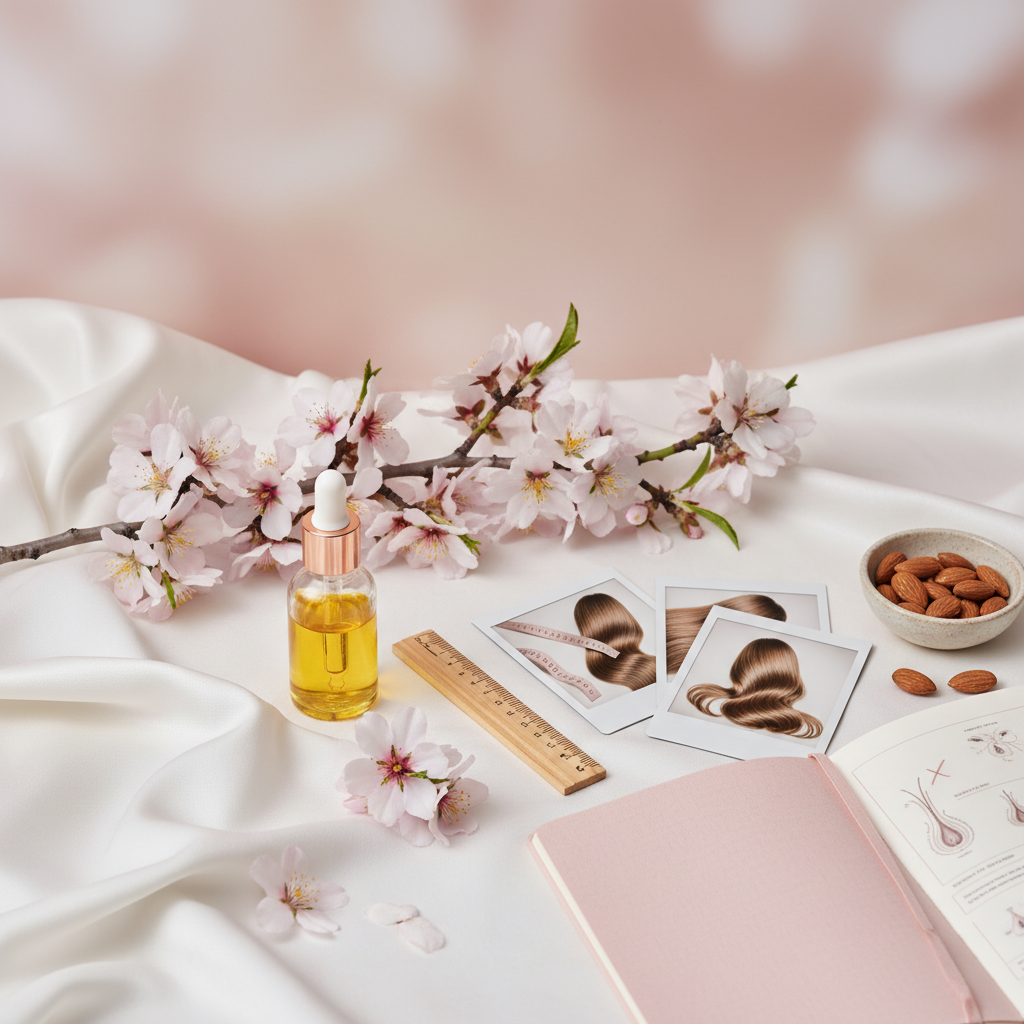
Case Study: 6-Month Almond Oil Hair Growth Journey — Measurements, Photos, and Lessons
When Sarah, a 28-year-old marketing professional, reached out to share her detailed documentation of using sweet almond oil for her hair routine over six months, we knew her methodical approach could offer valuable insights for others curious about almond oil for hair growth. What follows is an educational case study based on her experience, measurements, and observations.
Important note: This case study is shared for educational purposes only. Individual results may vary significantly, and this should not be considered medical advice or a guarantee of similar outcomes. Always consult with a qualified healthcare provider for concerns about hair loss or scalp conditions.
Background and Initial Context
Sarah had been experiencing what she described as "slower hair growth and increased breakage" following a stressful period that included a job change and relocation. Her shoulder-length hair felt thinner, and she noticed more strands in her brush than usual. Rather than immediately seeking commercial treatments, she decided to research natural approaches and became curious about sweet almond oil after reading about its traditional use in hair care.
Starting Point Assessment
Before beginning her almond oil routine, Sarah established baseline measurements:
- Hair length: 14 inches from crown to longest point
- Circumference: Ponytail measured 3.2 inches around
- Scalp condition: Slightly dry with occasional flaking
- Hair texture: Fine to medium, naturally straight with slight wave
- Previous routine: Washing every other day with drugstore shampoo and conditioner
Sarah took detailed photos from multiple angles and kept a simple journal to track her observations, understanding that hair growth is influenced by many factors including genetics, nutrition, stress levels, and overall health.
The Almond Oil Approach
After researching various methods, Sarah developed a consistent routine using pure, cold-pressed sweet almond oil. Her approach included:
Weekly Hot Oil Treatments
Every Sunday evening, Sarah performed almond oil hot oil treatments using this method:
- Warmed 2-3 tablespoons of almond oil in a small bowl placed in warm water
- Applied oil from mid-length to ends, then worked into scalp with gentle massage
- Covered hair with a shower cap and left for 30-45 minutes
- Shampooed twice to remove oil, followed by light conditioning on ends only
Daily Scalp Maintenance
For her almond oil scalp treatment routine, Sarah applied a few drops of almond oil to her fingertips each evening and massaged gently into her scalp for 2-3 minutes before bed.
Leave-In Protection
On wash days, Sarah applied a small amount of almond oil to damp hair ends as a leave-in treatment, being careful not to over-apply and weigh down her fine hair.
Monthly Observations and Measurements
Sarah documented her observations each month, taking the same measurement and photo angles for consistency. Here's what she recorded:
Month 1: Initial Adjustments
Measurements: Length remained 14 inches (expected, as visible growth typically takes time)
Observations: Sarah noted that her scalp felt less dry and flaky after the first few treatments. She experimented with oil amounts, finding that less was more for her fine hair texture. Her hair appeared shinier, though she couldn't determine if this was due to the oil's natural light-reflecting properties.
Month 2: Routine Refinement
Measurements: Length measured 14.3 inches
Observations: The slight measurement increase could be attributed to normal hair growth (hair typically grows about 0.5 inches per month on average). Sarah reported that her hair felt softer and more manageable. She reduced the frequency of washing to every third day, as her hair seemed less oily at the roots.
Month 3: Noticeable Changes
Measurements: Length reached 14.8 inches, ponytail circumference increased to 3.4 inches
Observations: Sarah began noticing what appeared to be new growth around her hairline - short, fine hairs that hadn't been visible before. Whether this was new growth or existing hair becoming more noticeable due to improved condition is unclear. She also reported finding fewer hairs in her brush during daily styling.
Month 4: Continued Progress
Measurements: Length measured 15.2 inches
Observations: The measurements suggested consistent growth within normal ranges. Sarah's hair appeared fuller in photos, though this could be attributed to several factors including improved hair health, reduced breakage, or photographic variables. Her scalp remained comfortable with no irritation from the oil treatments.
Month 5: Evaluation Point
Measurements: Length reached 15.7 inches, ponytail circumference measured 3.5 inches
Observations: Sarah noted that her hair felt stronger when wet - less stretchy and prone to snapping during styling. The overall appearance seemed healthier, with what she described as better light reflection and less frizz in humid conditions.
Month 6: Final Assessment
Measurements: Final length of 16.1 inches, ponytail circumference of 3.6 inches
Observations: Over the six-month period, Sarah's hair grew approximately 2.1 inches, which falls within the normal range of hair growth (typically 3-6 inches per year). The circumference increase suggested either reduced hair loss, improved hair condition making existing hair appear fuller, or a combination of factors.
Key Variables and Considerations
Throughout her documentation, Sarah was careful to note other factors that may have influenced her results:
Lifestyle Changes
- Stress reduction: Her job situation stabilized during month 2
- Nutrition: She began taking a multivitamin in month 3
- Sleep: Improved sleep schedule from month 4 onward
- Seasonal factors: The study period included winter through early summer
Hair Care Modifications
- Reduced washing frequency
- Eliminated heat styling tools after month 2
- Switched to a silk pillowcase in month 4
- Used less aggressive brushing techniques
Sarah acknowledged that these concurrent changes made it impossible to attribute results solely to almond oil use, which is an important consideration for anyone evaluating such approaches.
Lessons Learned and Practical Insights
Based on her six-month experience, Sarah identified several key takeaways:
Application Techniques Matter
Finding the right amount of oil for her hair type required experimentation. Too much left her hair greasy, while too little didn't seem to provide the conditioning benefits she was seeking. She found that warming the oil made application easier and potentially more effective.
Consistency Was Key
Sarah noted that the most noticeable improvements occurred when she maintained her routine consistently. Skipping treatments during a busy week seemed to result in her hair feeling less manageable.
Patience Required
Visible changes took time to appear. Sarah emphasized that expecting overnight results would have led to disappointment and potentially abandoning the routine prematurely.
Individual Results Vary
What worked for Sarah's fine, straight hair might not be suitable for other hair types. She recommended that others consider their own hair characteristics when developing routines.
Scientific Context and Limitations
While Sarah's case study provides interesting observational data, it's important to understand its limitations within a scientific context:
Single Subject Study
This represents one individual's experience and cannot be generalized to the broader population. Hair growth and condition are influenced by numerous factors including genetics, age, hormones, nutrition, and environmental conditions.
Multiple Variables
The concurrent lifestyle and hair care changes make it impossible to isolate almond oil as the sole factor in any observed improvements. This is common in real-world scenarios but limits the ability to draw definitive conclusions.
Measurement Subjectivity
While Sarah attempted to standardize her measurements, factors like hair positioning, tension during measurement, and natural hair elasticity could affect accuracy.
Photographic Variables
Lighting, camera angles, and styling can significantly impact how hair appears in photographs, making visual comparisons somewhat subjective.
Almond Oil Properties: Why It May Support Hair Health
Sweet almond oil contains several components that traditional use and some preliminary research suggest may benefit hair:
- Vitamin E: An antioxidant that may help protect hair from environmental damage
- Oleic acid: A monounsaturated fat that may help with moisture retention
- Linoleic acid: An essential fatty acid that some research suggests may support scalp health
- Protein: Small amounts that may temporarily fill in gaps in damaged hair cuticles
However, it's important to note that while these properties are theoretically beneficial, individual responses can vary significantly.
Safety Considerations and Best Practices
Based on Sarah's experience and general safety guidelines:
Patch Testing
Always perform a patch test before starting any new hair care routine. Apply a small amount of almond oil to the inside of your wrist and wait 24 hours to check for any allergic reactions.
Quality Matters
Use pure, cold-pressed sweet almond oil without additives. Sarah emphasized checking ingredient lists and purchasing from reputable sources.
Proper Removal
Ensure thorough removal of oil treatments to prevent buildup, which can weigh hair down and potentially clog follicles.
Professional Consultation
If experiencing significant hair loss or scalp issues, consult with a dermatologist or trichologist rather than relying solely on home treatments.
Conclusion: An Educational Journey
Sarah's six-month almond oil case study provides valuable insights into one person's experience with natural hair care approaches. While her results were generally positive, with measurements showing normal hair growth and subjective improvements in hair condition, it's crucial to remember that individual experiences vary significantly.
The most valuable aspects of Sarah's approach were her systematic documentation, realistic expectations, and acknowledgment of multiple contributing factors. Her experience suggests that for some individuals, incorporating almond oil into a consistent hair care routine may support overall hair health and manageability.
However, this case study should be viewed as one data point rather than definitive evidence. Those interested in trying similar approaches should consider their individual circumstances, hair type, and any existing scalp conditions while maintaining realistic expectations about outcomes.
Remember, healthy hair growth depends on many factors including genetics, nutrition, overall health, and proper hair care practices. Sweet almond oil may be one supportive element in a comprehensive approach to hair wellness, but it's not a magic solution for all hair concerns.
Disclaimer: This case study is presented for educational purposes only. Results described are specific to one individual and should not be expected or guaranteed for others. Always consult with qualified healthcare providers for concerns about hair loss or scalp conditions.