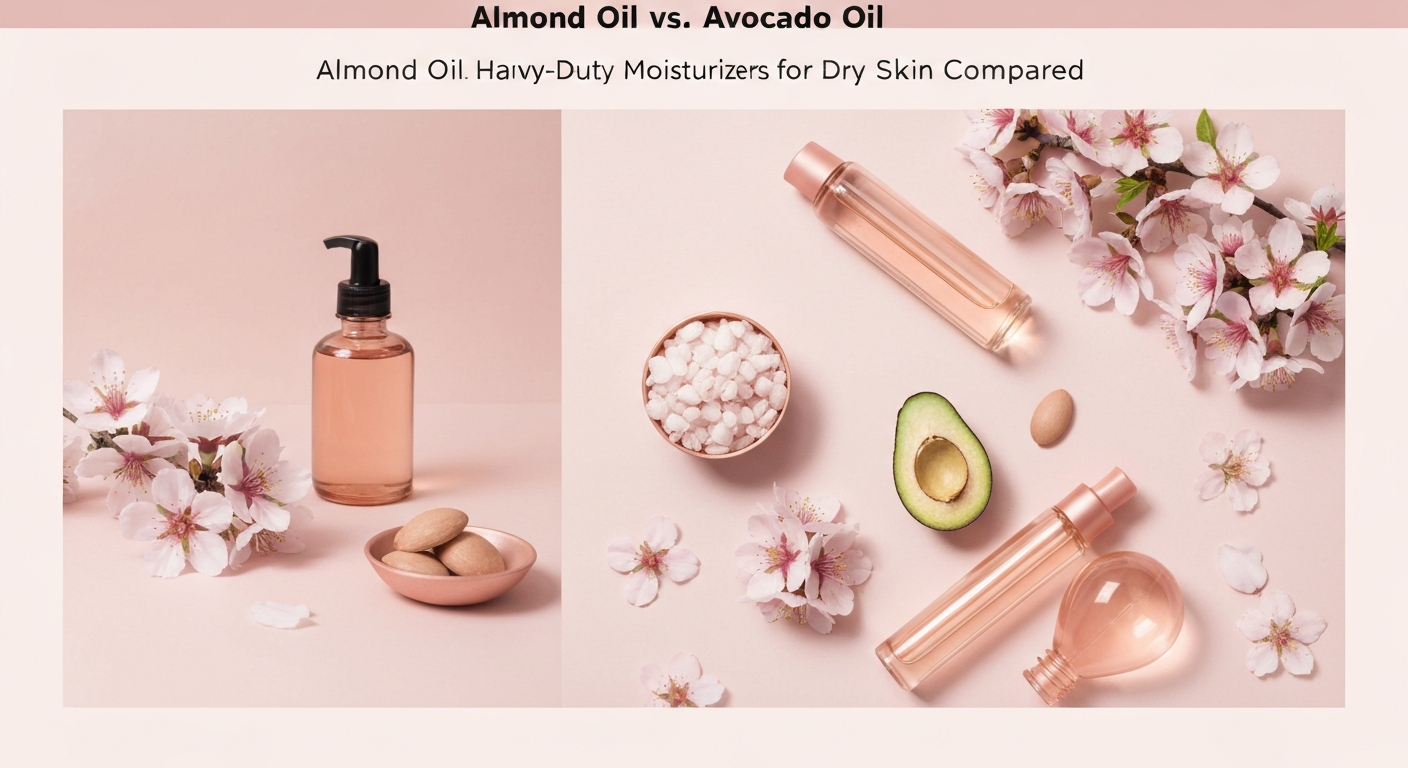
Almond Oil vs. Avocado Oil: Heavy-Duty Moisturizers for Dry Skin Compared
When your skin is crying out for serious moisture, reaching for a lightweight lotion just won't cut it. That's when it's time to bring in the heavy hitters: natural oils that can provide deep, lasting hydration. Two of the most beloved options for dry skin are sweet almond oil and avocado oil, but which one deserves a spot in your skincare routine?
Both oils have earned devoted followings for their rich, nourishing properties, but they each bring something unique to the table. Understanding the differences between almond oil vs avocado oil can help you choose the perfect match for your skin's specific needs and preferences.
Understanding These Powerhouse Moisturizers
Sweet Almond Oil: The Gentle Giant
Sweet almond oil has been a beauty staple for centuries, prized for its gentle nature and versatility. Extracted from the kernels of sweet almonds, this golden oil is rich in vitamin E, fatty acids, and minerals that may support skin health. Its molecular structure allows for relatively easy absorption, making it a popular choice for both face and body moisturizing.
What sets almond oil apart is its balanced composition. It contains approximately 70% oleic acid and 20% linoleic acid, creating a formula that many people find suitable for various skin types, including sensitive skin.
Avocado Oil: The Nutrient Powerhouse
Avocado oil brings the nutritional complexity of the whole fruit to your skincare routine. This rich, green-tinged oil is packed with vitamins A, D, and E, along with omega fatty acids and antioxidants. Unlike many other plant oils, avocado oil has a unique ability to penetrate deeper into the skin layers, potentially making it more effective for severely dry or mature skin.
The oil's high concentration of oleic acid (around 70%) and presence of palmitic acid give it exceptional moisturizing properties, while its antioxidant content may help protect against environmental stressors.
Head-to-Head Comparison
| Attribute | Sweet Almond Oil | Avocado Oil |
|---|---|---|
| Color | Light golden yellow | Deep green to golden |
| Consistency | Medium viscosity | Thick, rich viscosity |
| Absorption Rate | Moderate to fast | Slow to moderate |
| Scent | Mild, nutty | Mild, slightly earthy |
| Primary Fatty Acids | Oleic, Linoleic | Oleic, Palmitic |
| Vitamin E Content | High | Very high |
| Shelf Life | 1-2 years | 1-2 years |
| Best for Skin Type | All types, especially sensitive | Dry, mature, damaged |
| Price Range | Budget-friendly | Mid to high-range |
Sweet Almond Oil: Pros and Cons
The Advantages
- Universal Appeal: Suitable for most skin types, including sensitive and delicate facial skin
- Balanced Absorption: Absorbs well without leaving an overly greasy residue
- Gentle Formula: Less likely to cause irritation or clog pores
- Versatile Use: Works beautifully for face, body, hair, and even culinary applications
- Budget-Friendly: Generally more affordable than specialty oils
- Mild Scent: Won't compete with your favorite fragrance
- Easy Availability: Widely available in health stores and online
The Limitations
- Less Intensive: May not provide enough moisture for extremely dry or damaged skin
- Nut Allergy Concerns: Not suitable for those with tree nut allergies
- Lighter Nutrient Profile: Contains fewer specialized compounds compared to avocado oil
- May Need Reapplication: Might require more frequent use for severely dry skin
Avocado Oil: Pros and Cons
The Advantages
- Deep Penetration: May reach deeper skin layers for more intensive moisturizing
- Nutrient Dense: Rich in vitamins A, D, E, and antioxidants
- Long-Lasting Moisture: Provides extended hydration with less frequent application
- Mature Skin Friendly: May be particularly beneficial for aging or sun-damaged skin
- Anti-Inflammatory Properties: Contains compounds that may support skin comfort
- Protective Qualities: Antioxidants may help shield skin from environmental stressors
- Eczema-Friendly: Often well-tolerated by those with sensitive skin conditions
The Limitations
- Heavy Feel: Can feel greasy or overwhelming on oily skin types
- Slow Absorption: Takes longer to sink in compared to lighter oils
- Higher Cost: Generally more expensive than almond oil
- Strong Color: May temporarily tint very light skin slightly green
- Distinctive Scent: Some find the earthy aroma less appealing
- Comedogenic Potential: May clog pores for some acne-prone individuals
Texture and Feel: What to Expect
The experience of using these oils differs significantly. Almond oil glides on smoothly with a silky feel that absorbs relatively quickly, leaving skin soft without excessive shine. It's comfortable for daily use and won't interfere with makeup application when used in appropriate amounts.
Avocado oil, by contrast, has a richer, more luxurious feel. It spreads easily despite its thickness and creates a protective barrier that locks in moisture for hours. While it takes longer to absorb, many users appreciate the long-lasting hydration it provides, especially during harsh weather or for addressing particularly stubborn dry skin issues.
Best Use Cases: When to Choose Each Oil
Choose Sweet Almond Oil If You:
- Have sensitive or reactive skin
- Want a versatile oil for face and body
- Prefer lighter textures that absorb quickly
- Need an affordable daily moisturizer
- Want to use the same oil for multiple purposes (skin, hair, massage)
- Have normal to slightly dry skin
- Dislike heavy or greasy feeling products
Choose Avocado Oil If You:
- Have very dry, cracked, or mature skin
- Want intensive overnight moisturizing
- Don't mind richer textures and slower absorption
- Are looking for maximum nutrient content
- Have skin that needs extra protection from environmental damage
- Want long-lasting hydration with fewer applications
- Are dealing with specific skin concerns like eczema or dermatitis
Application Tips for Maximum Benefits
Getting the Most from Almond Oil
Apply almond oil to slightly damp skin to enhance absorption and spread. A few drops go a long way – start with less and add more if needed. For facial use, gently press the oil into skin rather than rubbing vigorously. It works beautifully as a makeup remover or mixed with your regular moisturizer for extra hydration.
Optimizing Avocado Oil Use
Due to its thickness, warm avocado oil slightly between your palms before applying. Use it primarily in the evening or during times when you can allow full absorption. For body use, apply after showering while skin is still damp. Consider mixing with lighter oils if you find it too heavy for your preferences.
Cost Considerations and Value
Sweet almond oil typically offers excellent value for money, with high-quality options available at reasonable prices. Its versatility means you're getting multiple products in one, potentially saving money on separate face, body, and hair treatments.
Avocado oil commands higher prices due to its complex extraction process and rich nutrient profile. However, because you need less product per application and reapply less frequently, it may offer good value for those who benefit from its intensive moisturizing properties.
Storage and Shelf Life
Both oils should be stored in cool, dark places to maintain their quality and extend shelf life. Look for dark glass bottles that protect from light exposure. Always check for rancidity signs like off odors or changes in color before use.
Quality matters significantly with both oils. Cold-pressed, unrefined versions typically offer the best nutrient retention and effectiveness, though they may have shorter shelf lives than processed alternatives.
The Verdict: Which Oil Wins?
The truth is, there's no universal winner in the avocado oil vs almond oil skin debate – it depends entirely on your individual needs and preferences.
Sweet almond oil emerges as the better choice for those seeking a gentle, versatile, budget-friendly option that works well for daily use across various skin types. Its balanced absorption and mild nature make it an excellent starting point for anyone new to facial oils or those with sensitive skin.
Avocado oil takes the crown when you need serious moisture intervention. If you're dealing with very dry skin, mature skin concerns, or harsh environmental conditions, its intensive hydrating properties and rich nutrient profile may provide the deep nourishment your skin craves.
Consider your skin's current condition, your lifestyle, and your beauty goals when making this choice. Some people even find that alternating between the two – using almond oil for daily maintenance and avocado oil for intensive treatment – gives them the best oil for dry skin results.
Remember to patch test any new oil before full application, and consult with a dermatologist if you have specific skin concerns or conditions. Both oils can be valuable additions to a thoughtful skincare routine when chosen and used appropriately for your unique needs.